“One operation can change a life. It doesn’t fix a system.”


A series about the silent epidemic in global healthcare access.
Synopsis
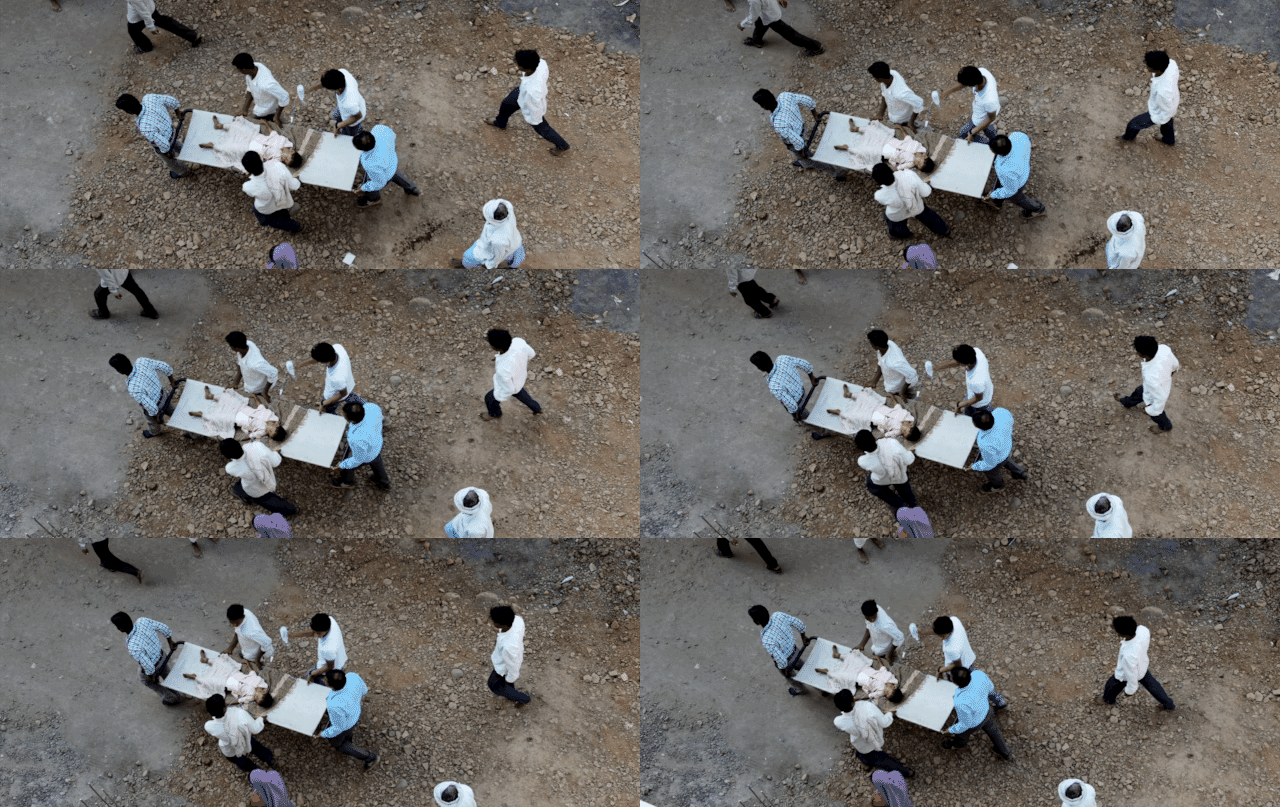
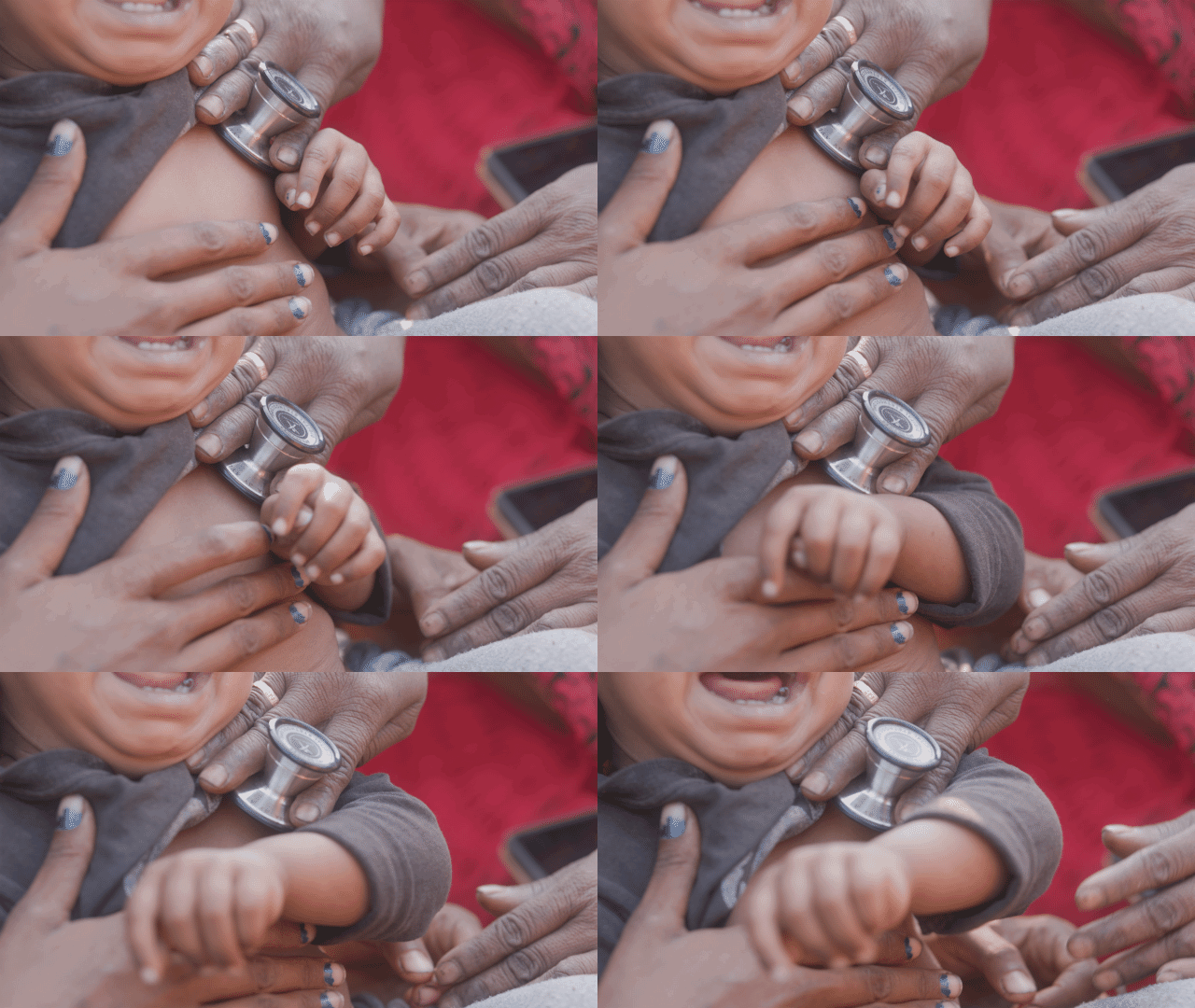
Five billion people can’t access basic surgical care – a global crisis hidden in plain sight. Spanning seven countries and over a decade of footage, Syndemic follows surgeons, patients and local health systems confronting the overwhelming surgical backlog. We meet acid attack survivors fighting to reclaim their place in society, and children with burn injuries regaining the ability to close their eyes for the first time in years. In this world, access is a lottery and only the lucky few win.
The series begins by showing that the problem is solvable, then dismantles the idea that goodwill alone can fix it. Moving beyond charity narratives, Syndemic interrogates the political, economic and post-colonial systems that determine who receives care and who is left behind. For many of the five billion, this is their first and last chance.
In Production
The series is currently in development and seeking producers, commissioning partners, impact collaborators and strategic supporters to bring these stories to a global stage.


watch the trailer
Meet the characters


Pitch-deck

the story
5 billion people worldwide lack timely and affordable access to surgical care resulting in high rates of avoidable disabilities and mortality


What is the issue?
Commentary
The wider public often remains unaware of the critical issue of global access to surgical care. The heart of the documentary lies in the stories of transformation from human suffering to success often through just one surgical procedure. These narratives resonate deeply with audiences, transcending geographical and cultural boundaries. By sharing these stories, you can evoke a sense of shared humanity among viewers, fostering understanding and compassion.
Woodrow’s mission to advocate for global access to surgical care and to provide faces and expressions to the human experiences of trauma, tragedy, and triumph is indeed a noble one.
Dr Dilip Gahankari
On behalf of the Global Health Section, University hospital of Bonn we would like to thank Woodrow Wilson for his outstanding and inspiring work as documenter and advocator and look forward to further humanitarian cooperations with him and Interplast.
Dr Jan Wynands
“If she had not had this operation because her body would continue to grow, it would mean that her hip would suddenly become, would slowly and progressively become more and more disfigured. “
Prof. Mark Ashton
Plastic and Reconstructive surgery has an important role across the world not just in developed countries. I have every faith in Woodrow's ability to capture and inform the stories and provide education and inspiration.
Dr Graham Sellars
“We got her back to normal functioning. We got her back to work, we got her back to a life, and she enjoyed her life immensely for the time that she had, sadly just wasn't a long time. “
Dr Ian Hogarth
I think even for the average, a Australian who may have visited places like that, you may not be aware of it because is just beneath the surface. But the problem exists and the problem is global. Just because we don't see it here in the first world doesn't mean it doesn't. It's not there. And it's very much a problem that can be addressed. And a small amount of effort of acknowledgement and of assistance of the right people at the right place at the right time can make a huge difference to these people. And I think it's a really important message to get out there.
Dr Frank Lin
Why should any child in the world have both hands fused back against their wrist so they can't feed themselves and can't dress themselves? Why should anyone in the world suffer and why should we turn our back? We have a tremendous health system in Australia, and we should do our utmost to extend that health system for everybody, every human being in the world.
Dr David Pescod AO
There is disadvantage around the world. There is injustice and there's poverty, and it's actually the Australian public that need to make that change. It's also the Australian public that come together and direct governments in their policy. And if Australians truly cared about our neighbours, we would have governments that truly care about our neighbours.
Cameron Glover
CEO Interplast

Meet the film maker
Woodrow Wilson
Melbourne, Australia
Since 2014 I have been documenting developing aid programs across the world for a variety of NGO’s across education, healthcare and infrastructure.
In 2015 I was invited to document my first surgical aid program by Dr Dilip Gahankari in a remote village in central India called Mahan. That started a journey that changed my life indelibly.
Around 18 months ago I was in Uganda, joined by an international team to open a new hospital that had taken 4 years of fundraising to realise.
On our first day, around 150 burnt, injured and amputated children arrived from a call out in the region - and it was a scene that I have personally experienced repetitively in India, Tonga, Samoa, Mongolia and Papua New Guinea over the last 8 years. It’s an overwhelming story for most, but such an important one that I’ve become an advocate for.
My role has always been to create short content pieces for fundraising - but after all these projects, I realised that the general public is still very much in the dark around surgical access in lower- and middle-income countries.
In addition, the public is unaware of the incredible work Australian and New Zealand teams do with limited resources, especially after a decade of the decline of foreign aid.
To my knowledge, after much research, I do not believe a feature documentary covering this topic has been created yet and I feel I am in a unique position to tell it given my experience, familiarity with the subject and community I have made over the years.